Every layer off. Nothing underneath touched.
Eight coats of gloss on a Victorian door frame. Masonry paint hiding a brick front that should never have been painted. Flaking colour on railings that just gets painted over again every spring. The laser takes paint off layer by layer and stops at the surface you actually want to see.
Is the laser right for your job?
Laser is right when…
- Paint on brick or stonemasonry paint off house fronts and garden walls
- Layered paint on metalrailings, gates, radiators, beams
- Paint on hardwood you want to keepsee also wood restoration
- Lead-era paint you don’t want to sandno airborne dust cloud — it’s extracted at source
It’s the wrong tool when…
- Modern flexible coatings on soft rendercan lift the render face — needs testing first
- Plastics and uPVCthe laser doesn’t distinguish paint from plastic
- Whole-house repaint prep on sound paintif it’s not failing, keying it up is cheaper than stripping it
Not sure which side you’re on?
Send the photo— you’ll get an honest yes or no, not a sales pitch. Sometimes the answer is “that paint’s sound — just key it and repaint”, and I’ll tell you that too.
Where painted-over goes back to original
- Painted brick house frontsthe big one — quoted by the square metre
- Garden and boundary wallsmasonry paint and old limewash
- Railings and gatesusually alongside rust removal
- Period radiatorsdetail the dip-strippers melt
- Front door frames and porcheslayers back to crisp timber
- Stone sills and stepspaint drips and full coats
- Metal furniture and frames
- Graffiti over-paintingcouncil grey patches off brick — see graffiti page
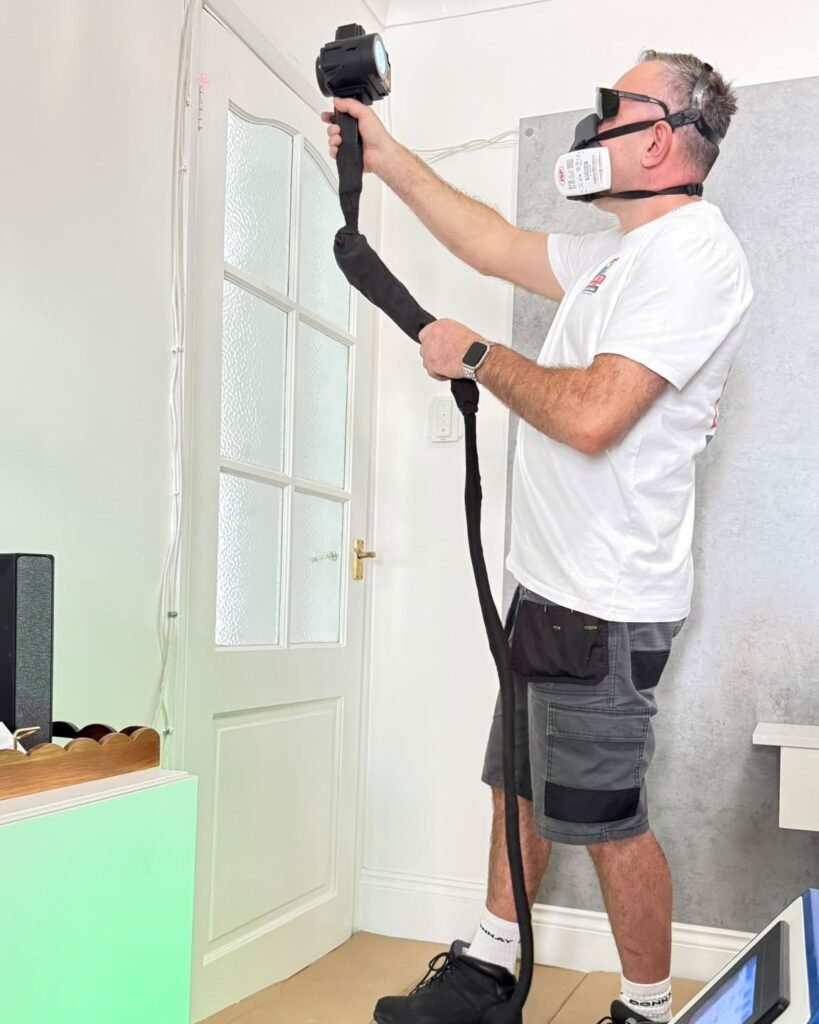
Paint absorbs the laser’s energy and flashes to dust one thin layer per pass, so I control depth by controlling passes — eight coats come off a Victorian frame one era at a time. Brick, stone and metal beneath reflect most of the beam, so there’s no gouging and no blast scar. It’s also why the laser is the safest approach to old lead-era paint: nothing is sanded into the air, the residue goes straight into the extractor, and there’s no chemical sludge to dispose of.
Quoted by the surface, confirmed before I start
Small items and single features from the £50 call-out; walls and house fronts by the square metre; full elevations priced individually for the project. Photo plus rough sizes gets you a confirmed price. Full context on the price guide.
“Excellent work, took care hanging a number of items and accommodate all my requests very helpfully! Will definitely use Pawel again.”Mark, Hampton · Hanging Paintings / Mirrors / TV · MyBuilder, Sep 2025 — read all 50+ reviews
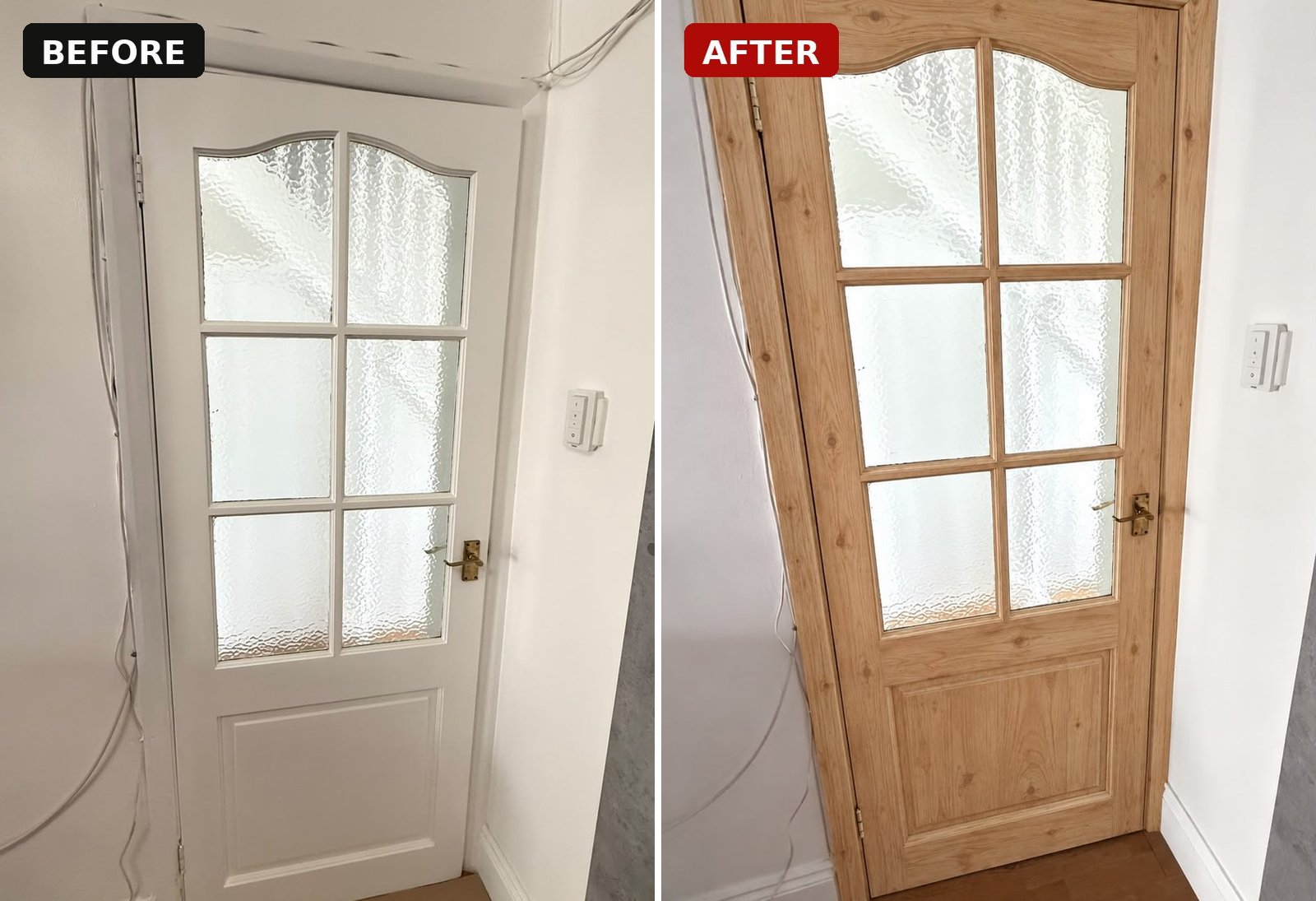
Painted shut for years. Oak underneath.
Same door, same doorway, same afternoon. Thick white paint lifted off layer by layer, with the mouldings, the glazing bars and the glass all left exactly as they were. No sanding dust through the house, no stripper smell, no grain torn out.
Paint removal questions
Can you remove masonry paint from brick?
Yes — it’s one of the best uses of the laser. Paint comes off pass by pass while the fired brick face stays intact, with none of the saturation damage of pressure-jet stripping or the scarring of blasting. I always test a discreet patch first and show you before quoting the full area.
Is laser paint removal safe for old lead paint?
It’s the least risky method available to a homeowner: the paint is converted to dust at the beam and captured by extraction rather than sanded into the air. I still treat pre-1970s paint with full precautions as standard.
How much does it cost to strip a painted brick wall?
By the square metre, depending on paint type and layers — that’s why the test patch comes first. A typical terraced porch is a part-day job; a full front elevation is a bigger project, priced individually. Quote confirmed before any booking.
Will it work on my front door?
On timber doors, yes — see wood restoration for how I handle grain. On uPVC or composite doors, no, and I’ll say so straight away.
Do you repaint or refinish after stripping?
I can — I’m a handyman before I’m a laser operator. Priming, painting and refinishing on the same or a follow-up visit keeps it one job with one person responsible.
Under that paint is the surface you bought.
Photo of the wall, frame or feature — test patch arranged, confirmed price to follow.