
The grain survives. Only the paint doesn’t.
Sanding flattens the character out of old timber. Chemical stripper turns your kitchen into a fume cupboard and still leaves paint in the grain. The laser lifts paint and varnish off wood layer by layer, following every contour — beams, doors, bannisters, furniture — and leaves the surface the tree made.
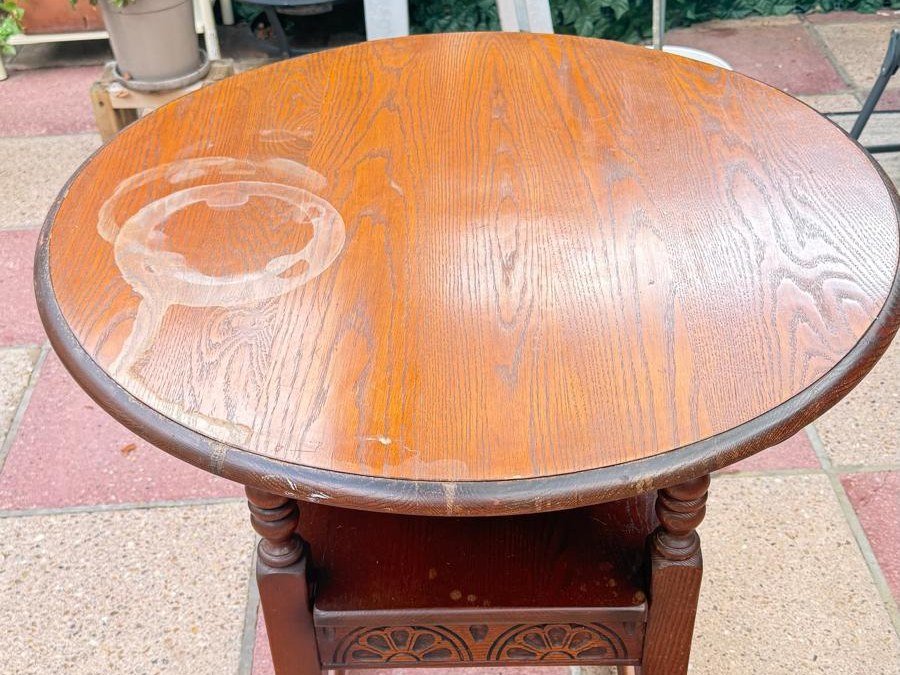
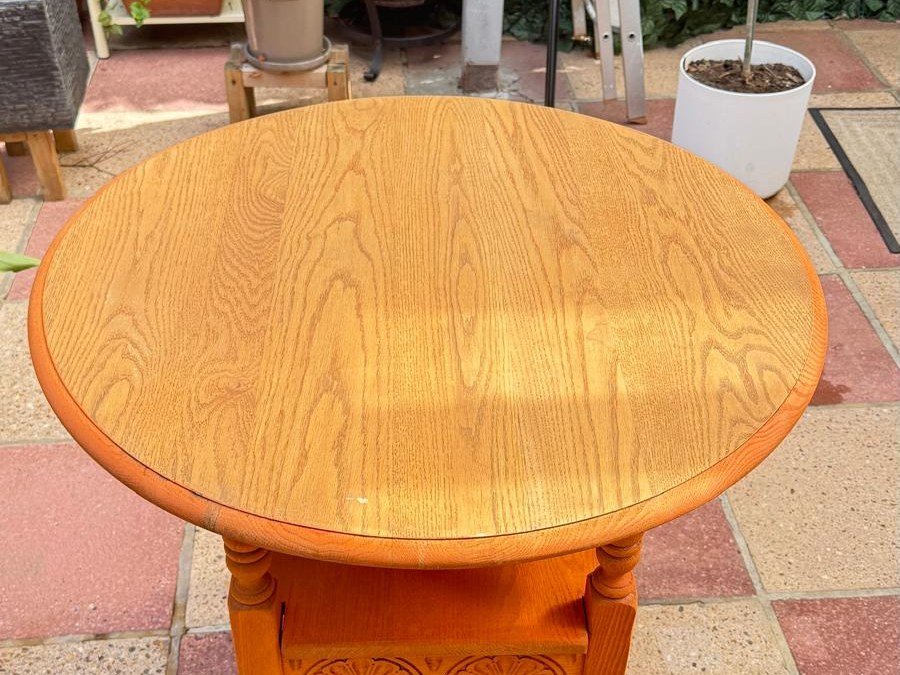
Is the laser right for your job?
Laser is right when…
- Painted or varnished hardwoodoak, elm, mahogany — doors, beams, stairs
- Detailed mouldings and carvingspaint out of profiles sanding destroys
- Ceiling beams in situno dismantling, dust extracted at the beam
- Furniture worth savingthe dresser that’s ‘good under all that paint’
It’s the wrong tool when…
- Soft, resinous softwoods with delicate surfacessome pine scorches — the test patch decides
- Veneers and thin marquetrytoo little material to work with; a furniture restorer’s job
- Wood you plan to paint again anywaykeying the old coat is cheaper than stripping it
Not sure which side you’re on?
Send the photo— you’ll get an honest yes or no, not a sales pitch. Sometimes the answer is “a light sand and repaint will do fine”, and I’ll tell you that too.
Wood that’s better underneath
- Ceiling and structural beamsin place, no dismantling
- Front and internal doorsperiod four-panels a speciality
- Staircases and bannistersspindles the sander can’t reach
- Fire surroundspaint out of the carving
- Furnituredressers, tables, chests, chairs
- Window frames and sillsgently, with the glass masked
- Floorboard borders and thresholds
- Garden gates and timber furniturepaired with re-oiling or painting
Wood is the surface that shows off the laser’s finesse: paint and varnish absorb the pulse and lift away, while I keep the energy below the threshold where timber itself would mark. Because the beam follows the surface, mouldings, carvings and grain texture keep their crispness — the exact detail that sanding blunts and dip-stripping swells. Every species behaves differently, so timber work always starts with a test patch on a hidden face, and I finish with a fine hand-sand and your choice of oil, wax, or primer.
Test patch, then a confirmed quote
Doors and furniture pieces quoted individually; beams by the metre; a room’s worth of timber priced individually for the project. Small items can be collected and done off-site, often cheaper. Full context on the price guide.
“I am very pleased with the dresser he put together for me. He turned up on time and was friendly, courteous and professional. I highly recommend him.”Liz, Crawley · Various · MyBuilder, Jul 2025 — read all 50+ reviews
Wood restoration questions
Does the laser burn or scorch the wood?
Not when it’s run properly — the settings that strip paint sit below the threshold that marks timber, and the test patch on a hidden face proves it on your exact wood before we commit. Some resinous softwoods are genuinely riskier, and I’ll say so at the test.
Is it better than dip-stripping a door?
Dipping soaks the door, can open joints and raise grain, and takes it away for weeks. The laser does it in place or same-day off-site, dry, with the mouldings intact. Dipping is cheaper for doors you don’t care about; the laser is for doors you do.
Can you strip painted beams without taking them down?
Yes — in-situ beams are one of the best uses of the machine. Dust is extracted at the beam, the room is sheeted, and there’s no chemical smell in your house.
What finish goes on afterwards?
Your choice — Danish oil, hard wax, varnish, or primer if it’s being repainted. I include a fine hand-sand and can do the finishing as part of the visit; I’m a carpenter as well as a laser operator.
Can you do furniture?
Yes, and small pieces can be collected, done off-site and returned — usually the cheaper route. Veneered and marquetry pieces are the exception; those belong with a specialist restorer and I’ll tell you so.
What’s under the paint?
Photo of the beam, door or piece — test patch on a hidden face, then a confirmed quote.